
At the end of spring 2025, a young Turkey Vulture began spending time with two humans in Howell, MI. For almost a week, he lingered close to their home, following them as they worked outside, calmly watching from nearby, and roosting in a tree each evening. While turkey vultures are often seen soaring high overhead, they are not known for shadowing people around the yard. Thankfully the finder did the right thing and gave us a call!
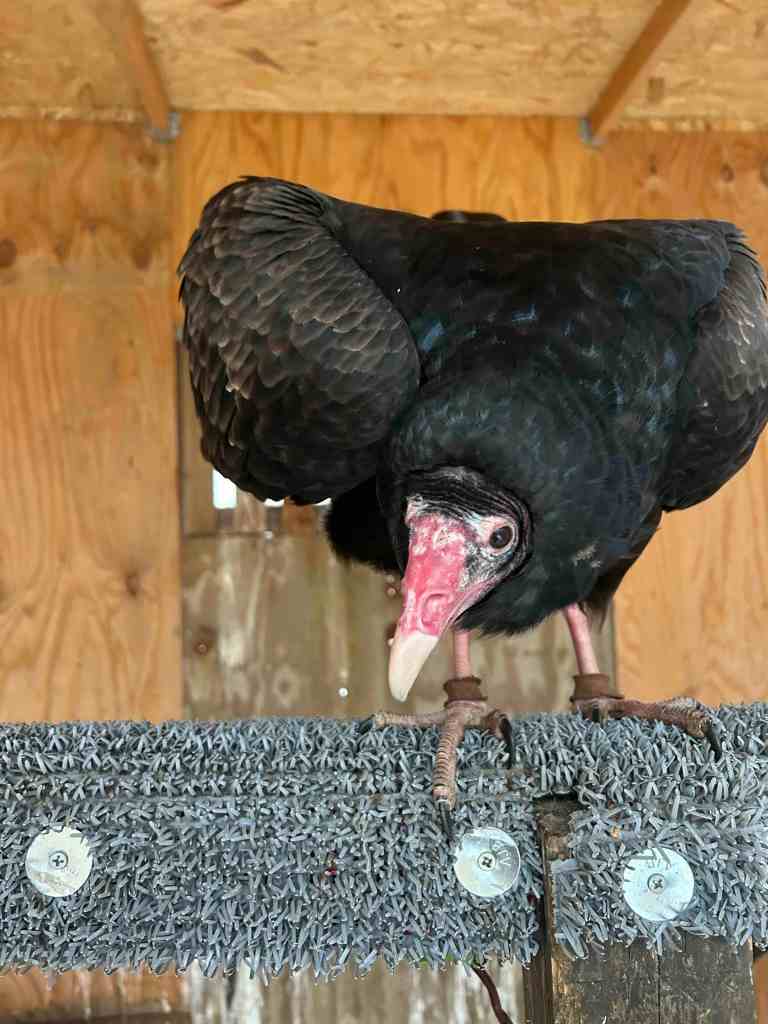
After thorough examination, this first year male — named Earl by the finders— was determined to be non-releasable. Earl shows strong signs of imprinting. He is not fearful of people and actually prefers to be near humans. His head coloring and feather condition suggest he may have been improperly fed while growing.
In the wild, a turkey vulture relies on natural wariness, social behaviors, and learned survival skills. Earl, did not showcase his ability to survive on his own. But Earl’s story is not a sad one — it’s a story about second chances. Earl is healthy, curious, and full of personality. Like many vultures, he is intelligent and observant, and he has already won over the hearts of our team. Now, he needs a forever home — a permitted educational facility where he can serve as an ambassador for his species and help people better understand these often-misunderstood birds. After a thorough interview process, we’re excited to share that Earl has found the perfect forever home! He will be heading to Long Branch Nature Center in Arlington, Virginia, where he will help educate hundreds of students each year and serve as a dedicated wildlife ambassador for the community.
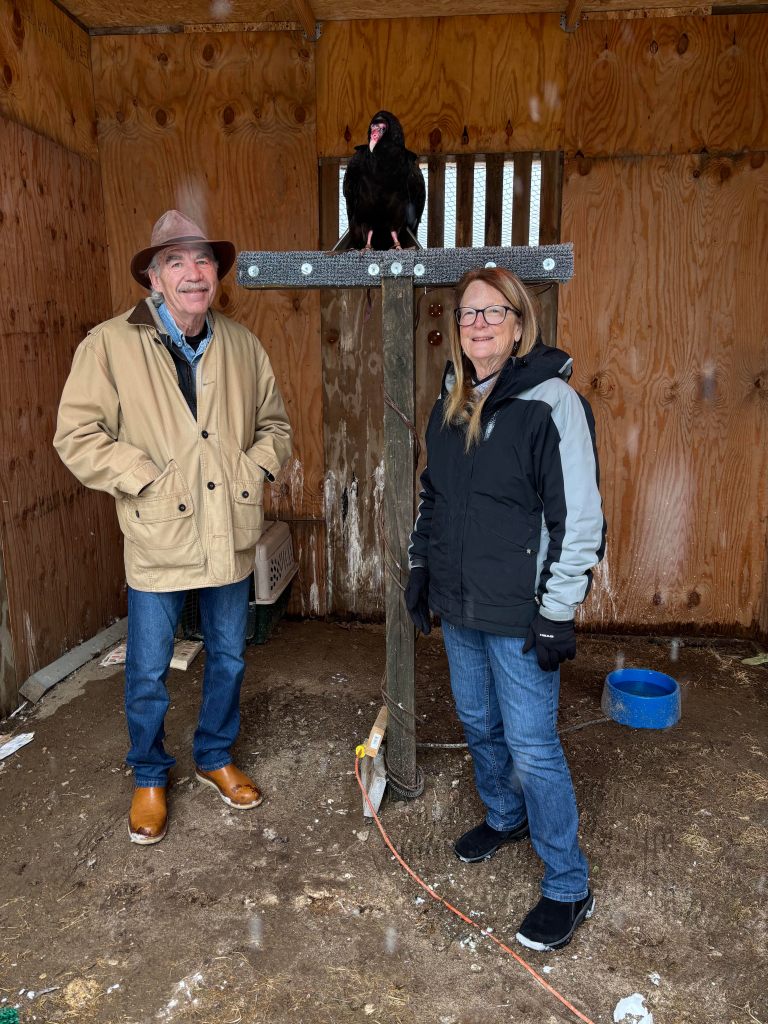
Turkey vultures play a vital ecological role as nature’s clean-up crew. They prevent the spread of disease, recycle nutrients back into the ecosystem, and are an essential part of a healthy environment. Through Earl, thousands of people could learn to appreciate the quiet importance of vultures in our world. We thrilled to find him placement where he can thrive, educate, and live safely for the rest of his life. From watching gardeners to potentially inspiring classrooms full of students, Earl’s journey is still unfolding and we just love this photo of Earl with his finder family Dave and Diane K from Howell, MI. 
P.S. Baby season is here! Many raptors are cavity nesters and depend on standing dead trees for safe nesting sites. When possible, consider leaving dead trees (snags) in place, they provide critical homes for growing wildlife families.
 Raptor Center of Southeast Michigan
Leave a comment