
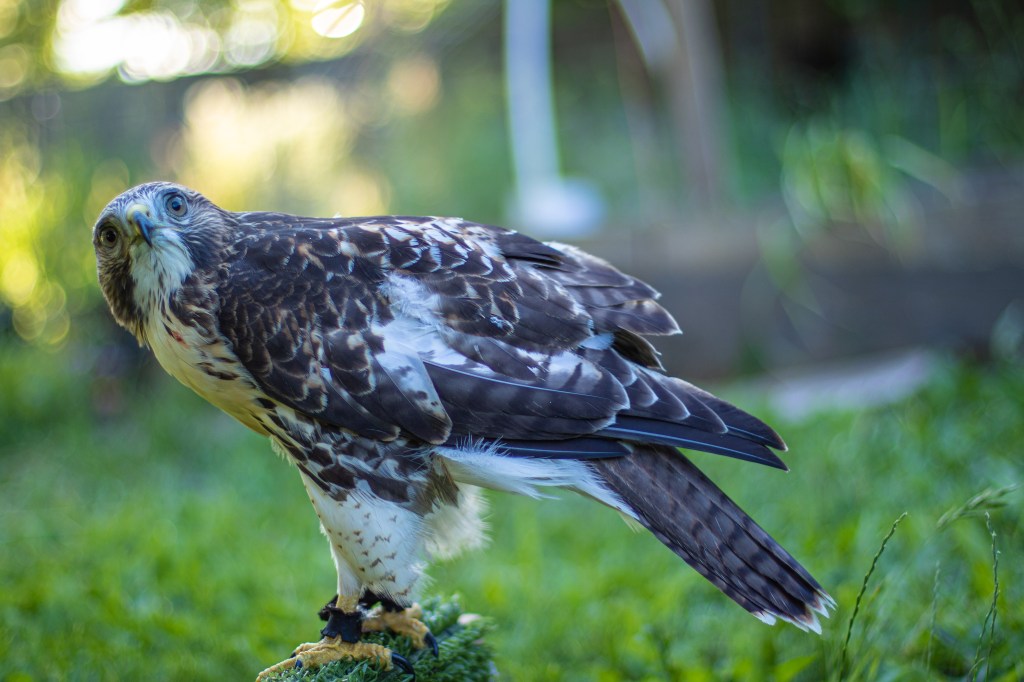
The Raptor Center of Southeast Michigan (RCSM) is dedicated to rehabilitating sick, injured, or orphaned birds of prey and returning them to the wild in a healthy, fit condition.
If you find a bird you believe is injured or in distress, here’s what to do—safely, legally, and responsibly.
Step 1: Call First — Don’t Touch the Bird Yet
Before approaching the bird, call us at 734-221-0176.
If possible, send a photo and your location so we can help assess the situation and provide guidance.
If you found an injured or orphaned raptor outside of the Thumb and Southeast Michigan region, please view the Department of Natural Resources (DNR) Michigan Licensed Rehabilitators list at www2.dnr.state.mi.us/dlr/
Step 2: Assess the Situation
Is it a Baby Bird?
Fledgling (feathered, hopping): Leave it alone, but follow your gut! If you think it needs help, give us a call. Fledgling is a natural phase of learning to fly, and the parents are likely nearby.
Nestling (bare or fluffy, no feathers): Gently return it to the nest or cavity if you can find it. Parents will not reject it if touched by humans—this is a myth. Can’t find the nest or cavity, give us a call.
Is the Bird Injured?
Signs of injury include:
- Obvious wounds or bleeding
- Broken wings or limbs
- Visible parasites (maggots, flies)
- Lethargy, imbalance, head down, weakness or inability to fly
If the bird does not fly away when approached, and isn’t near food or defending a nest, it may need help.
Step 3: Safelty Contain the Raptor
Raptors are dangerous—even when injured or young. Your safety is the top priority.
You’ll Need:
- A sturdy box or pet carrier (slightly larger than the bird)
- An old towel or blanket
- Thick work gloves or winter gloves
- Safety glasses
Containment Steps:
- Gently drape the towel over the bird, covering its head.
- Wearing gloves, scoop up the bird, keeping its wings close to its body.
- Place it into the box or carrier, remove the towel if you can and close the lid securely.
- Keep the box in a warm, dark, quiet place (like a garage, closet, or basement) until you can find transportation to a rehabilitator.
- Do not feed or give water to the bird.
Take note of where the bird was found—especially important for baby birds that might be returned to their families later.
Things to Avoid
Do not attempt to rehabilitate or raise the bird yourself.
Do not feed or give water to the bird—it can do more harm than good.
Do not handle a bird unnecessarily or bring it indoors around pets or children.
Do not keep the bird—it is illegal to possess a wild raptor without proper federal and state permits.
Who to Contact
If you are unable to reach the Raptor Center of Southeast Michigan, contact:
- A licensed wildlife rehabilitator in your area (visit Michigan Licensed Rehabilitators DNR directory for a full list)
- Your state’s Department of Wildlife Resources
- The U.S. Fish and Wildlife Service
Additional Resources
Wild Wings Bird Rehab – About Raptors
Audubon Society: Help for Injured or Orphaned Birds
I Found A Baby Bird, Now What?
Raptor Center of
Southeast Michigan
Location
Contact
© 2025 Raptor Center of Southeast Michigan. All website content and images are the property of Raptor Center of Southeast Michigan or used with permission.
Thank you for supporting our mission!
 Raptor Center of Southeast Michigan